
Washington’s Clean Energy Transformation Act (CETA): What It Means for the State’s Energy Future

Updated: Mar 30
Washington’s Clean Energy Transformation Act (CETA) requires utilities to transition to carbon-neutral electricity by 2030.
The law (SB 5116-2019-20) also commits Washington to transitioning its electric power system to 100% clean electricity by 2045.
CETA represents a fundamental shift in how electricity is produced, delivered, and regulated in the state.

The Three Major Milestones
CETA establishes three key deadlines.
2025: Eliminate Coal Power
Washington law requires utilities to remove coal-fired electricity from their power supply by the end of 2025. The state’s last coal facility—the TransAlta Centralia Generating Station—was scheduled to shut down its remaining coal unit at that time.
However, in December 2025 the U.S. Department of Energy issued a temporary emergency order under the direction of President Trump requiring the plant to remain available to operate due to concerns about regional grid reliability. The order has triggered legal challenges from Washington State and environmental groups.
Although the plant has stopped generating electricity from coal, the dispute highlights the complex balance between state climate policy, federal authority, and regional grid reliability.
2030: Carbon-Neutral Electricity
By 2030, utilities must supply electricity that is carbon-neutral.
Utilities can meet this target through a combination of:
renewable energy
energy efficiency
demand response
energy storage
market purchases
renewable energy credits
limited alternative compliance mechanisms
2045: 100% Clean Electricity
By 2045, utilities must provide electricity that is entirely free of greenhouse gas emissions.
Eligible resources include:
wind power
solar power
hydropower
geothermal energy
certain forms of renewable hydrogen
energy storage paired with clean resources
What Makes Washington Unique
Washington already had one major advantage before CETA passed.
The state generates a large share of its electricity from hydropower—roughly 60–70% of Washington’s electricity, making the state one of the cleanest power systems in the country.
However, as electricity demand grows—especially from electric vehicles, heat pumps, and data centers—new clean energy resources are needed.
Infrastructure Expansion
Meeting CETA’s goals will require major investments in infrastructure, including:
new utility-scale solar farms
new wind generation
battery storage systems
transmission lines
grid modernization technologies
These projects will support both emissions reduction and economic development.
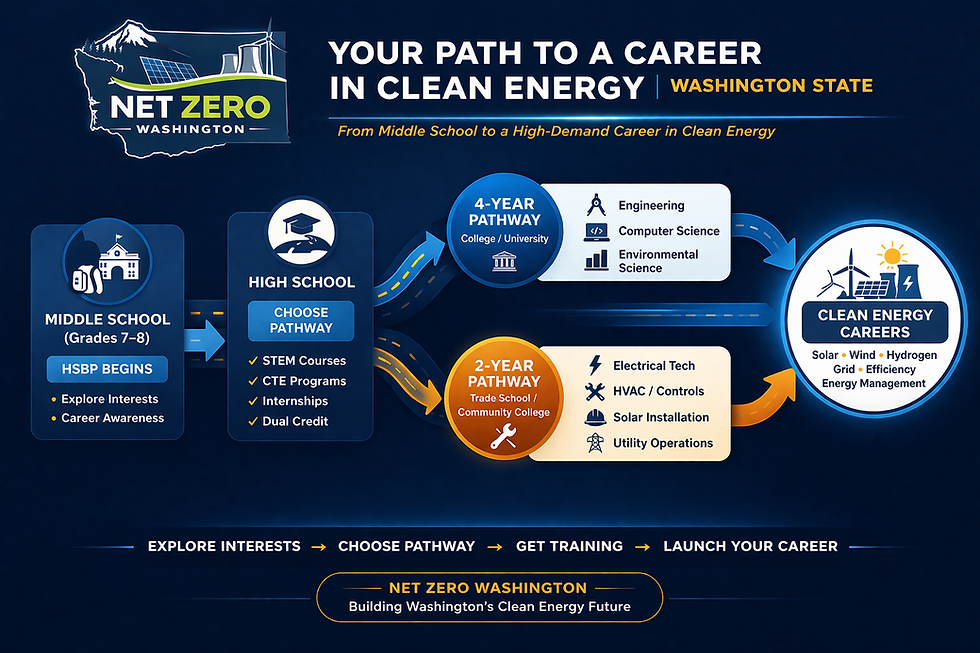
Workforce Implications
CETA is not just an environmental policy.
It is also a workforce policy.
The transition to clean electricity will require workers across many sectors, including:
electrical trades
engineering
environmental consulting
construction
grid operations
manufacturing
Thousands of jobs will be created as utilities expand clean energy capacity.
The Challenge Ahead
While the goals are clear, the path forward is complex.
Utilities must keep electricity affordable while balancing several priorities including:
maintaining grid reliability
expanding renewable energy production
building new transmission infrastructure
These challenges require careful planning, innovation, and collaboration.
Looking Forward
Washington’s Clean Energy Transformation Act places the state at the forefront of the clean electricity transition in the United States.
Over the next two decades, CETA will drive major investments in energy infrastructure, workforce development, and grid modernization.
The result will shape not only the state’s electricity system—but also its economy.
The CETA is carried out largely by the WA State Department of Commerce which oversees policy implementation, state energy planning, and grant programs.
Utility companies, however, report to the Utilities and Transportation Commission for compliance.

Comments